
Radiohead
Bailando a la vuelta de la esquina
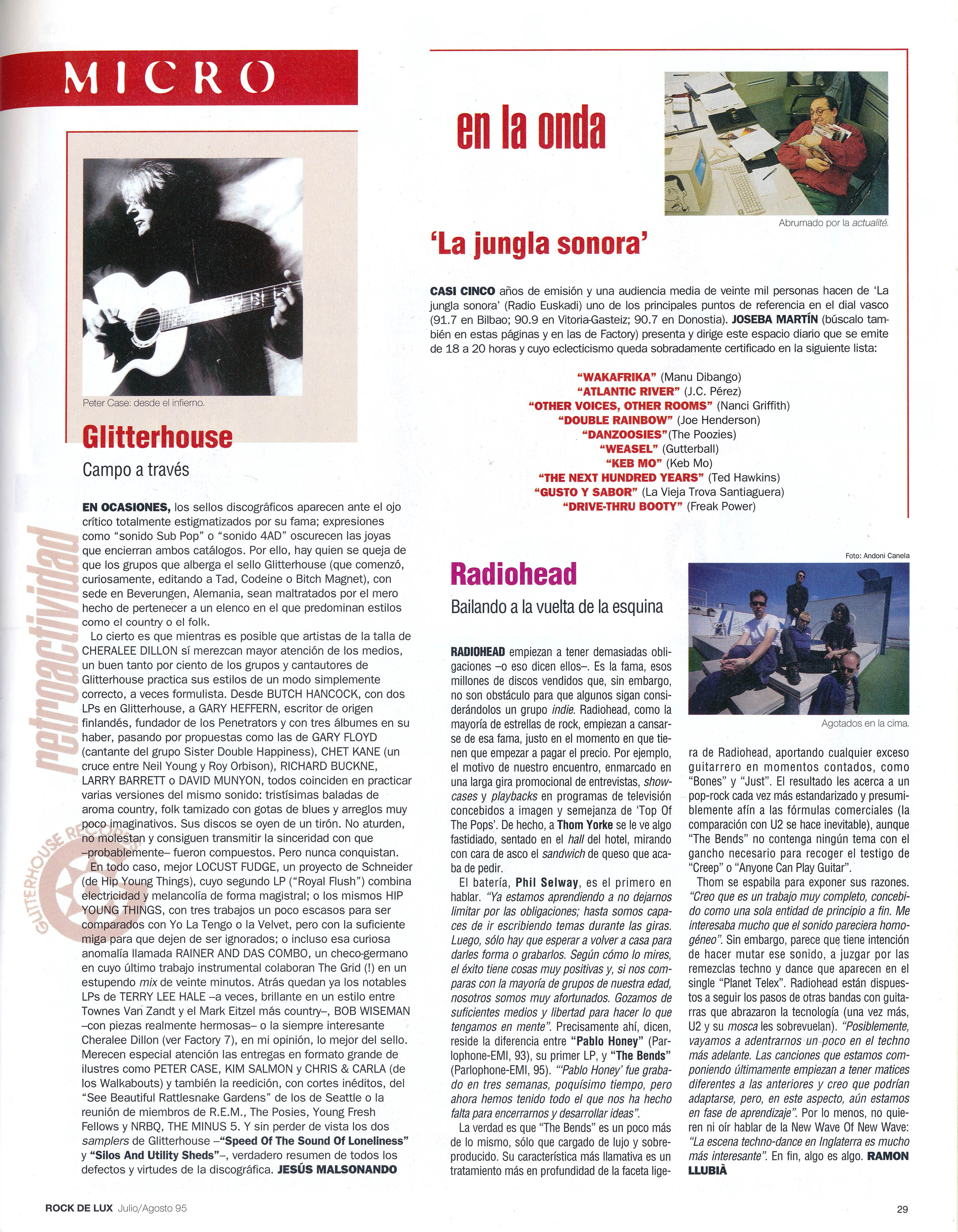
RADIOHEAD empiezan a tener demasiadas obligaciones -o eso dicen ellos-. Es la fama, esos millones de discos vendidos que, sin embargo, no son obstáculo para que algunos sigan considerándolos un grupo indie. Radiohead, como la mayoría de estrellas de rock, empiezan a cansarse de esa fama, justo en el momento en que tienen que empezar a pagar el precio. Por ejemplo, el motivo de nuestro encuentro, enmarcado en una larga gira promocional de entrevistas, showcases y playbacks en programas de televisión concebidos a imagen y semejanza de 'Top Of The Pops'. De hecho, a Thom Yorke se le ve algo fastidiado, sentado en el hall del hotel, mirando con cara de asco el sandwich de queso que acaba de pedir.
El batería, Phil Selway, es el primero en hablar. "Ya estamos aprendiendo a no dejarnos limitar por las obligaciones; hasta somos capaces de ir escribiendo temas durante las giras. Luego, sólo hay que esperar a volver a casa para darles forma o grabarlos. Según como lo mires, el éxito tiene cosas muy positivas y, si nos comparas con la mayoría de grupos de nuestra edad, nosotros somos muy afortunados. Gozamos de suficientes medios y libertad para hacer lo que tengamos en mente". Precisamente ahí, dicen, reside la diferencia entre "Pablo Honey" (Parlophone-EMI, 93), su primer LP, y "The Bends" (Parlophone-EMI, 95). "'Pablo Honey' fue grabado en tres semanas, poquísimo tiempo, pero ahora hemos tenido todo el que nos ha hecho falta para encerrarnos y desarrollar ideas".
La verdad es que "The Bends" es un poco más de lo mismo, sólo que cargado de lujo y sobreproducido. Su característica más llamativa es un tratamiento más en profundidad de la faceta ligera de Radiohead, aportando cualquier exceso guitarrero en momentos contados, como "Bones" y "Just". El resultado les acerca a un pop -rock cada vez más estandarizado y presumiblemente afín a las fórmulas comerciales (la comparación con U2 se hace inevitable), aunque "The Bends" no contenga ningún tema con el gancho necesario para recoger el testigo de "Creep" o "Anyone Can Play Guitar".
Thom se espabila para exponer sus razones. "Creo que es un trabajo muy completo, concebido como una sola entidad de principio a fin. Me interesaba mucho que el sonido pareciera homogéneo". Sin embargo, parece que tiene intención de hacer mutar ese sonido, a juzgar por las remezclas techno y dance que aparecen en elsingle "Planet Telex". Radiohead están dispuestos a seguir los pasos de otras bandas con guitarras que abrazaron la tecnología (una vez más, U2 y su mosca sobrevuelan). "Posiblemente, vayamos a adentrarnos un poco en el techno más adelante. Las canciones que estamos componiendo últimamente empiezan a tener matices diferentes a las anteriores y creo que podrían adaptarse, pero, en este aspecto, aún estamos en fase de aprendizaje". Por lo menos, no quieren ni oír hablar de New Wave Of New Wave: "La escena techno-dance en Inglaterra es mucho más interesante". En fin, algo es algo. RAMÓN LLUBIÀ