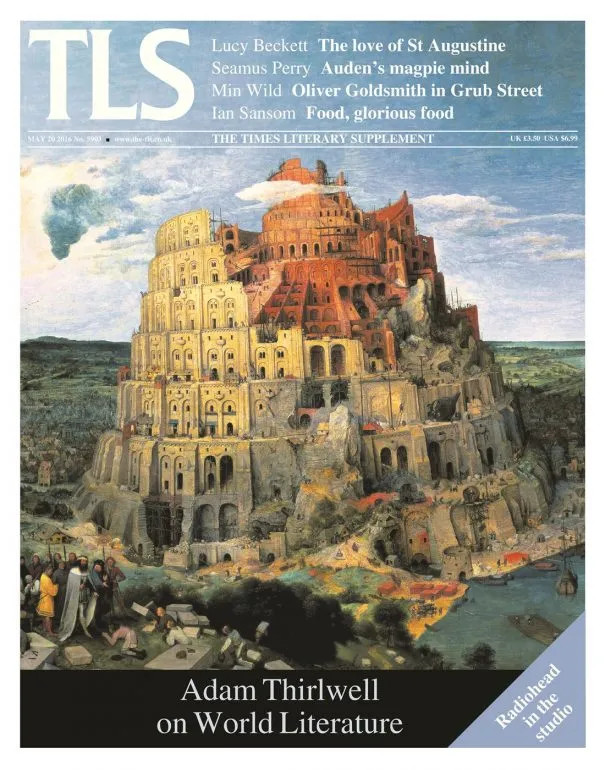
In a room with Radiohead
Colin has contacted me to say he'll be recording with his band "nearish you", outside Saint-Rémy-de-Provence. We would have most of the morning to chat, as recording is usually between midday and the early hours. I have never before seen a band at work in the studio, and the band in question - Radiohead - is notoriously secretive about its methods. Would I get a glimpse?
The route keeps to the ancient Via Domitia between olive groves and ripe vineyards: joining the road just metres away from our flat in central Nîmes, I leave it an hour later for a country lane, down which the studios are reached between two stone pillars. La Fabrique was once a nineteenth-century mill where madder root was crushed into red dye and artist's pigment. In 1889, Van Gogh voluntarily entered the asylum in Saint-Rémy, producing dozens of paintings; perhaps he paid the mill a visit.
At any rate, his spirit would be a suitable presiding genius for the band's sojourn here: what I have understood through Colin is that Radiohead achieve their music through a kind of obsessional persistence, much of it by trial and error. Years ago, Colin played me the taped result of a week or so's exploration in their Oxford studios; it was a mere sketch, and I wondered how on earth those basic rhythms and chords could become one of the intricate, haunting and eccentrically original numbers, streaked by Thom Yorke's bright voice (frequently ranging into a crystalline falsetto), that have turned Radiohead from a sixth form band into the world's most inventive.
I park in the front courtyard and Colin appears in a dark blue jersey, jeans and white trainers, greeting me warmly. The plan is to start with breakfast as the rest of the band trickle in. I haven't seen them since they played the huge Roman arena in Nîmes three years before. Colin was nervous at the time: over supper in our flat, he reminded us that this gig was their first since the tragic accident in Toronto, when the lighting rig collapsed onto the stage and the tour's drum technician, Scott Johnson, was killed. The Nîmes concert was remarkable, ending with multiple images of Scott. Backstage afterwards there was a palpable sense of relief.
The old mill, a three-storey edifice of vast length and many glassed-in arches, sits in two hectares of parkland and is famous for its varied acoustics: the likes of Morrissey and Nick Cave have recorded here. After coffee and croissants in the cosy dining room, Colin takes me on a tour, from the music library holding the biggest vinyl collection in the world to a gargantuan grain storehouse now full of dusty film canisters and boxes containing unplayable digital tapes (an early misstep in the march of progress). The studio itself is strange: a sunlit suite of rooms with antique rugs, ornate fireplaces and elegant period furniture, lined with books in wooden cabinets and invaded by recording equipment, as if the teenage scion of a stately home has taken advantage of his parents' absence. A whiteboard shows only a list of tracks in black marker pen, starting with "Daydreaming" and ending with "Burn the Witch". The rejected James Bond film tune, "Spectre", floats in the middle, slightly separate. Colin points to the main console, a vast sweep of knobs, buttons and faders. "This is a Neve 88 R, seventy-two channels, made in Burnley. Worth about a hundred thousand. It's analog, like this reel-to-reel Studer, but we also use digital. It's all about looping and layering." In the older, vaulted section, part of the floor is stone, with a giant hieroglyph chiselled out. "Probably Roman", he explains. "Where the millstone went."
This is all layers as well, a millefeuille of epochs and moments, and seems perfectly attuned to Radiohead's methods. We wander out into the grounds: tree-surrounded lawns, large swimming pool, further courtyards and barns, decayed cottages and a softly roaring mill-race. In one of the larger granges, numerous canvases display abstract explosions of colour. The barn's speakers are wired up to the recording studios: the band's resident artist Stanley Donwood reacts in acrylic to what he hears, the results to be modified and manipulated on computer for the LP's cover.
Colin is discreet about his role, playing the straight man to his charismatic younger brother, Jonny, whose gaunt good looks seem forever obscured behind loops of lampblack hair. Colin once told me, half-jokingly, that he reckoned he was "rubbish" at playing, that he really had to concentrate on the complex rhythms, the bass line often holding everything together: in concert he keeps his back to the audience, bowed over the guitar, with a little rhythm-marking jump now and again, as if over an invisible rope. It's at moments like these that I sense the band dissolving back into its sixth form origins: as if my own distant memories of tootling on a sax in a cellar to my schoolfriends' blasts of guitar and drums might just have ended up in a similar place, being roared at by hundreds of thousands of fans. I once asked Colin what that was like. "You focus down on the stage, which becomes your own intimate space. You're just playing in your room with friends."
Phil the drummer greets us in one of the courtyards. I tell him that my grown-up children watched him perform solo recently in Victoria Park in London and they thought he was the best. "Oh blimey", he says, touchingly pleased. "I looked around and realized I was the oldest participant, apart from Patti Smith." The five members of Radiohead have been worrying about their age for some time: dining with the band one evening in an Arles square thirteen years ago, I heard Thom Yorke announce that he would quit rock music when he was forty. He didn't want to be a Mick Jagger, still prancing about in his withered old age. Fifty now looms, but when he appears crossing a lawn in a kind of Flaubertian dressing gown and towel turban, cool behind reflective shades, he could be twenty, aside from his salt-and-pepper stubble. He agrees that the last Nîmes concert was "pretty emotional". Knowing he has another long day of intense creating in front of him, we leave him be.
Colin and I catch up on personal things at the table on the gravel sweep between mill and garden, with a view of clipped box shrubs in ornamental vases, and brawny Ed, the genial six-foot-three guitarist, basking shirtless a few yards along. I ask Colin if he's pleased with the recording so far: expectations are high after five years. "I can't talk about it much, as Nigel [the producer] is really secretive about our ways. But I like a lot of it. It's beautifully lyrical in places. There's one with a straight chord sequence, so that can go next to the cold spy one. The fluffy puppy next to the warthog!" I ask if the band are perfectionists. "Oh, I don't know. I suppose we can't be or we'd never release anything. And we all have different likes."
Back in the studio, the youthful technicians are checking things over. Jonny, ever restless, is in a brass-studded leather chair crouched over his home-made sound machine (little hammers hitting various objects) and its accompanying laptop, and Ed is listening to him in front of his long row of guitars. Jonny establishes a rhythm, part-calypso, part-reggae, with his yoghurt cartons, tubs, bells and mini-tambourine. "Sounds a bit like Marvin Gaye", Ed comments.
For all the priceless equipment, we have indeed come back to lads tinkering in their rooms: perhaps this is the heart of all this fertile imagining, its idiosyncrasies not so far from a poet's manner. Colin ushers me gently out, the secret ceremony about to begin. I mention Freelance; he's a TLS fan (he read English at Cambridge). "That'd be cool. It might be the only one, we're not commissioning anything. A literary piece, written by a poet! Just make sure you call me the more handsome of the Greenwood brothers", he adds, grinning, and I drive out of the gates into the ordinary world.